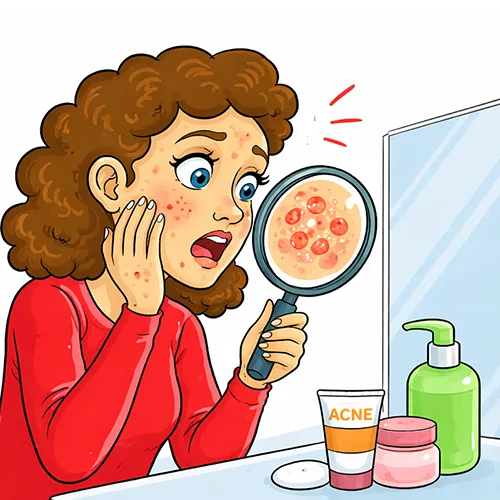
Ayurveda uses the term Kushta to describe skin diseases. The word Kushta. is derived from the phrase “Kushnathi Vapuh”, meaning that which alters the complexion and integrity of the body.
In Ayurveda, the understanding of skin diseases is fundamentally different from that of modern science. While modern medicine primarily focuses on external manifestations, Ayurveda explains skin disorders in a systematic, internal, and holistic manner.
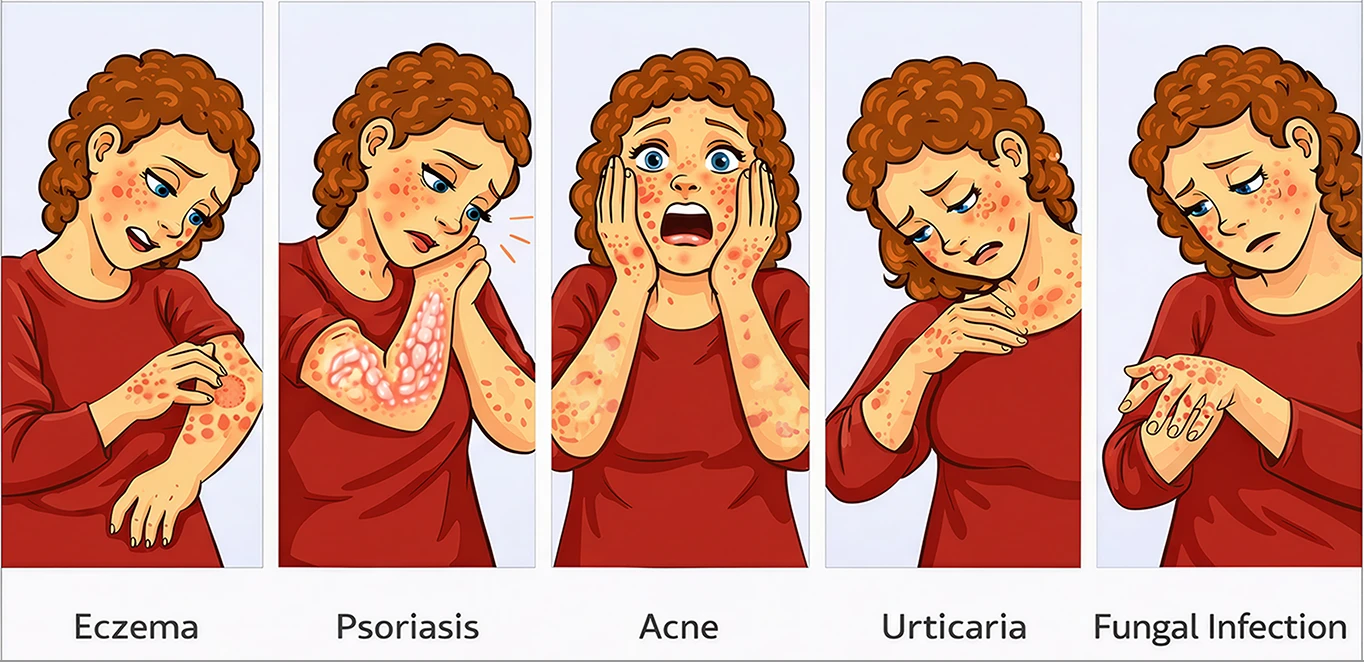
Conditions such as eczema, psoriasis, acne, urticaria, and fungal infections are broadly described under Kushta. and Kshudra Kushta in Ayurvedic texts. Many of these conditions can be correlated with modern dermatological diagnoses.
Does applying a cream only to the outer skin truly cure the condition? Why has the skin been affected in the first place? Is it only the outer layer of the skin involved, or is the skin reflecting deeper internal imbalances and toxins within the body?
Ayurveda clearly states that skin diseases are not merely external disorders, but rather manifestations of an internal imbalance of the Doshas, Dhatus, and Agni.
In simple terms:
The skin (Twak) reflects the overall health of the body, mind, digestion, and lifestyle.
Therefore, Ayurvedic management focuses on:
Most skin disorders involve Tridosha vitiation, with dominance varying according to the condition:
The majority of inflammatory skin diseases are Pitta–Kapha predominant.
Skin diseases mainly affect the following Dhatus:
Common etiological factors mentioned in Ayurveda include:
In Ayurveda, regardless of whether the treatment involves palliative care or purification therapies, the primary goal remains the same:
This is the first and most important step in treatment.
Shodhana is especially indicated in chronic and recurrent skin diseases.
Common Panchakarma procedures include:
Shamana Chikitsa refers to therapeutic measures that pacify aggravated Doshas without eliminating them from the body.
Shamana therapy helps by:
It is commonly used in mild cases, maintenance phases, and after Shodhana therapies.
Bahya Chikitsa includes treatments applied externally to relieve local symptoms and promote healing.
Some commonly used external therapies include:
In Ayurveda, no treatment is complete without proper Pathya (wholesome practices) and avoidance of Apathya (unwholesome practices).
Even the most effective medicines and therapies will fail if Pathya is neglected—especially in skin diseases, where diet, lifestyle, and digestion play a decisive role.
Acharya Charaka clearly states that:
Pathya itself can act as medicine, while Apathya can worsen the disease despite treatment.
In Ayurveda, treatment is never complete without proper Pathya (wholesome diet and lifestyle) and avoidance of Apathya (unwholesome habits). Skin diseases are strongly influenced by digestion, daily routine, and mental health. Even the best medicines and therapies will not give lasting results if incorrect food habits, incompatible food combinations, irregular sleep, stress, and poor lifestyle continue. Pathya helps in maintaining balanced Doshas, improving Agni, and preventing toxin (Ama) formation, while Apathya directly aggravates the condition and leads to recurrence. Therefore, dietary discipline and lifestyle correction are considered as important as medicines in the long-term management of skin diseases.
Ayurveda recognises a strong mind–skin connection. Stress, anxiety, anger, and emotional disturbances directly aggravate Doshas, particularly Pitta and Vata, and weaken digestion. Many chronic skin conditions worsen during periods of mental stress.
Practices such as adequate sleep, stress management, meditation, pranayama, and maintaining emotional balance play a vital role in healing. Without addressing mental well-being, skin diseases often become chronic and recurrent despite treatment.
Conclusion
Ayurvedic management of skin diseases is holistic, individualised, and root-cause oriented. By correcting internal imbalances, strengthening digestion, purifying the blood, and following proper Pathya, long-term relief and prevention of recurrence can be achieved.